Repair or replace? Signs you might need a new roof in Waterlooville
A damp patch or a tile in the garden does not automatically mean you need a new roof. A local fault may be repairable; leaks in several places, failing underlay or a dipping roofline need a wider inspection. The question is whether the damage is
confined to one area or spread across the roof. If you have noticed a leak or slipped tiles,
request a free, no-obligation assessment and quote or email us at
enquiries@waterloovilleroofers.co.uk.
The quick answer: repair or replace?
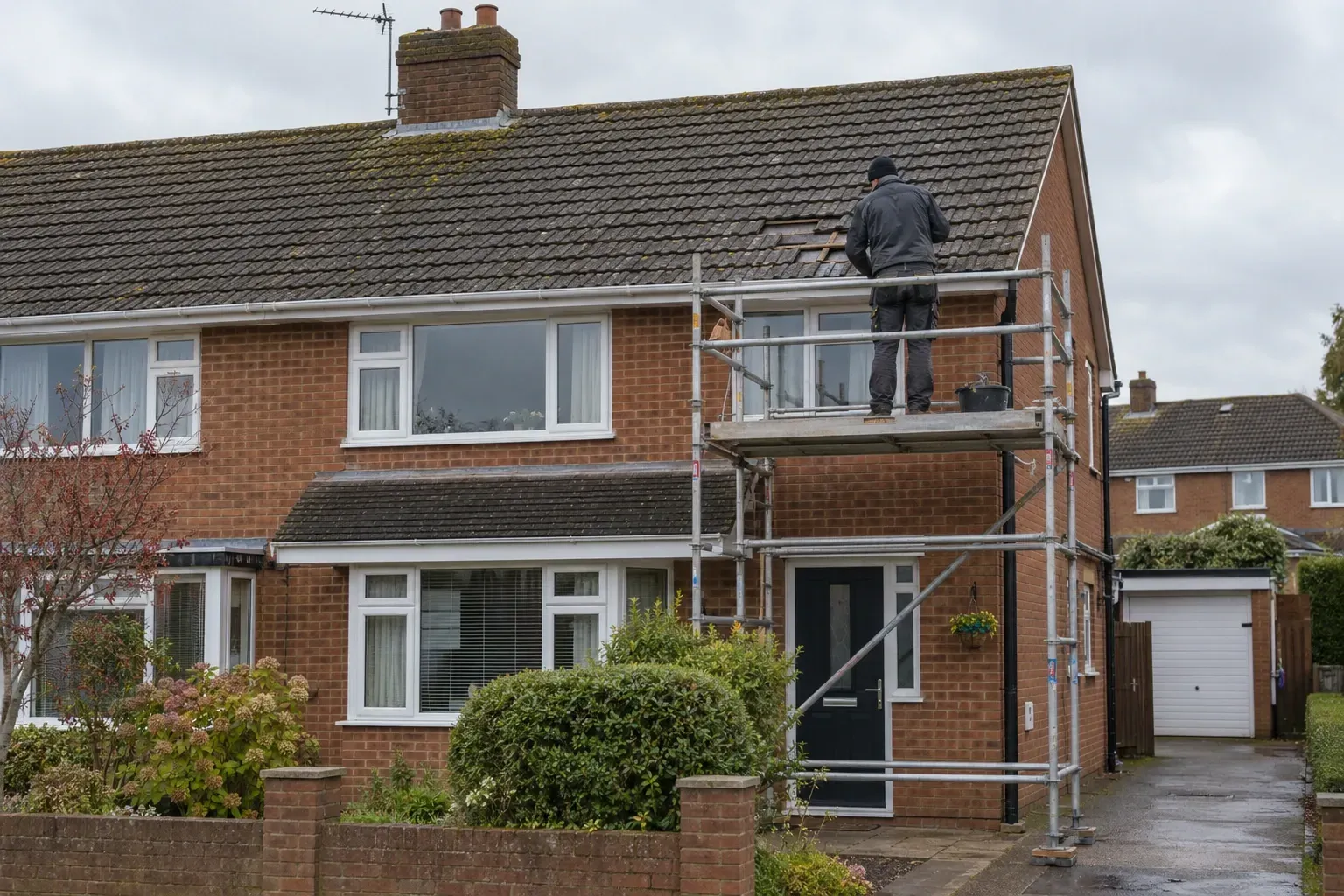
A repair often makes sense when the surrounding roof is sound, such as a few broken tiles or one failed flashing. Replacement is worth discussing when the covering, fixings or underlay are failing widely, the roofline sags, or properly repaired leaks return. Age alone is not the test. Ask the roofer to show what has failed and why the proposed work should last.
Eight signs your roof needs a closer look
1. Slipped, cracked or missing tiles
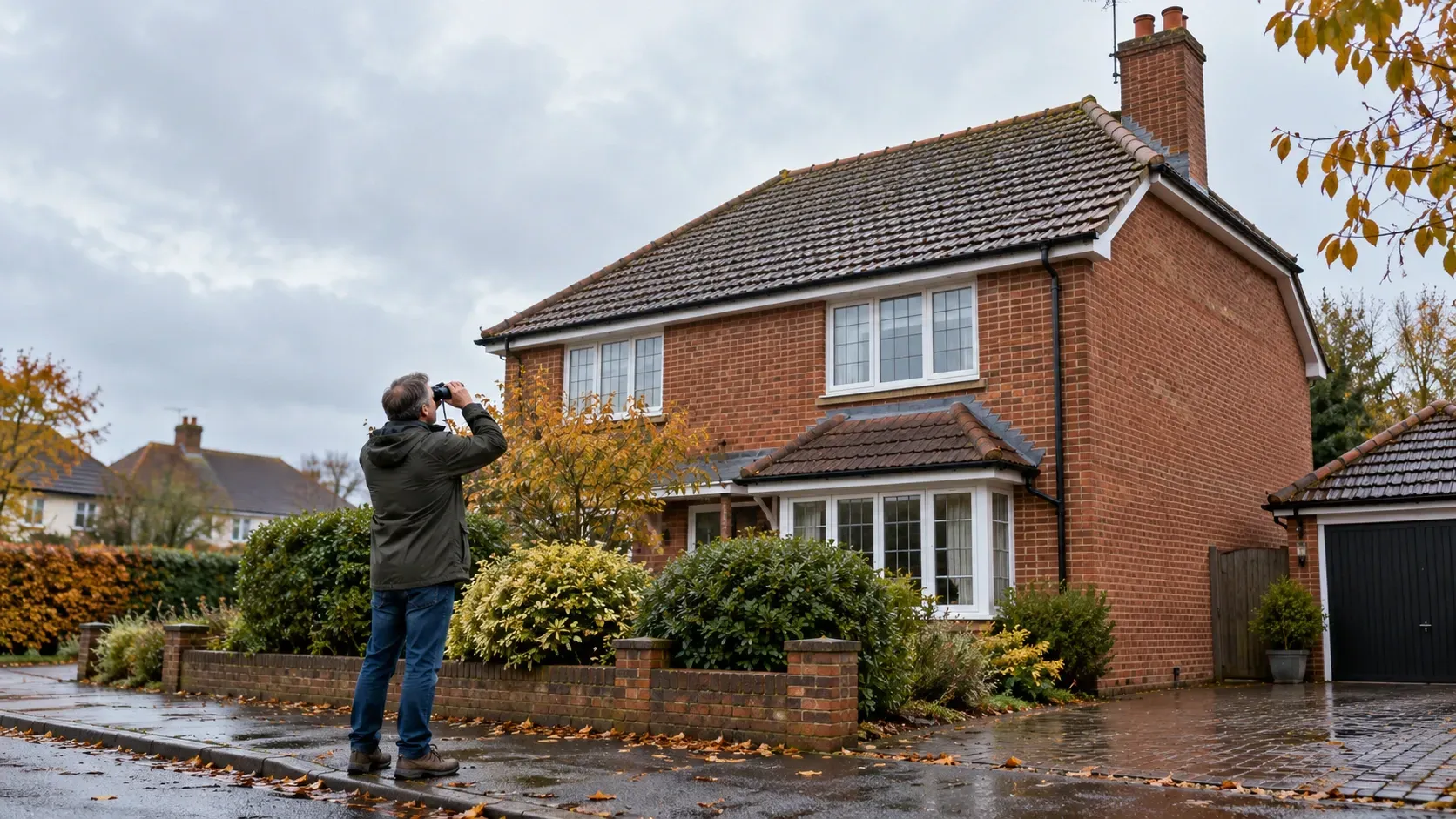
After south-westerly wind and driving rain, look from the ground for gaps, uneven tiles or fragments below the eaves. Water can reach the underlay and battens through a missing tile. One or two damaged tiles on an otherwise sound roof usually call for a roof repair. Breakage across several slopes or tiles that keep slipping may point to failing fixings or battens. Do not climb onto the roof.
2. Damp patches indoors
A stain needs tracing, not an instant re-roof. Rain can enter around a chimney, valley or roof window and travel before it appears inside. Condensation, plumbing and an overflowing gutter or damaged roofline can also cause marks. Photograph the stain, note when it changes and check the loft safely. One source may be repairable; new leaks in several places suggest a wider problem.
3. Daylight or damp in the loft
From a safe footing, look for wet timber, torn underlay, stains or unexpected gaps. Light at a designed vent is normal. On older slate roofs around Havant, corroded nails can also let slates slip. One gap may be a local repair, while widespread torn underlay or failing slate fixings needs a whole-roof assessment.
4. A sagging roofline
A new dip or bow along the ridge or slope needs prompt investigation, particularly with cracked plaster, wet rafters or a moving chimney. The cause could be a local timber defect or broader structural damage. Keep clear of unstable areas and ask whether a structural engineer is needed before agreeing to a patch or replacement.
5. Heavy moss or debris in gutters
Moss is common on shaded slopes and does not by itself mean the roof is worn out. It can block drainage, hide cracks or lift vulnerable tiles, though. Have grit in the gutter identified before assuming the tiles are failing. Sound tiles may only need maintenance or a local repair; avoid pressure washing, which can damage coverings. Moss alongside widespread cracks and leaks deserves a closer look.
6. Crumbling ridge, verge or chimney mortar
Loose ridge tiles, failing verge mortar and cracked pointing can admit water or create falling debris. Lifted flashing around a chimney is another possible leak source. These details are often repairable locally, but adjacent tiles and timbers should be checked. If the chimney itself is moving, arrange a chimney repair assessment.
7. A repair that keeps failing
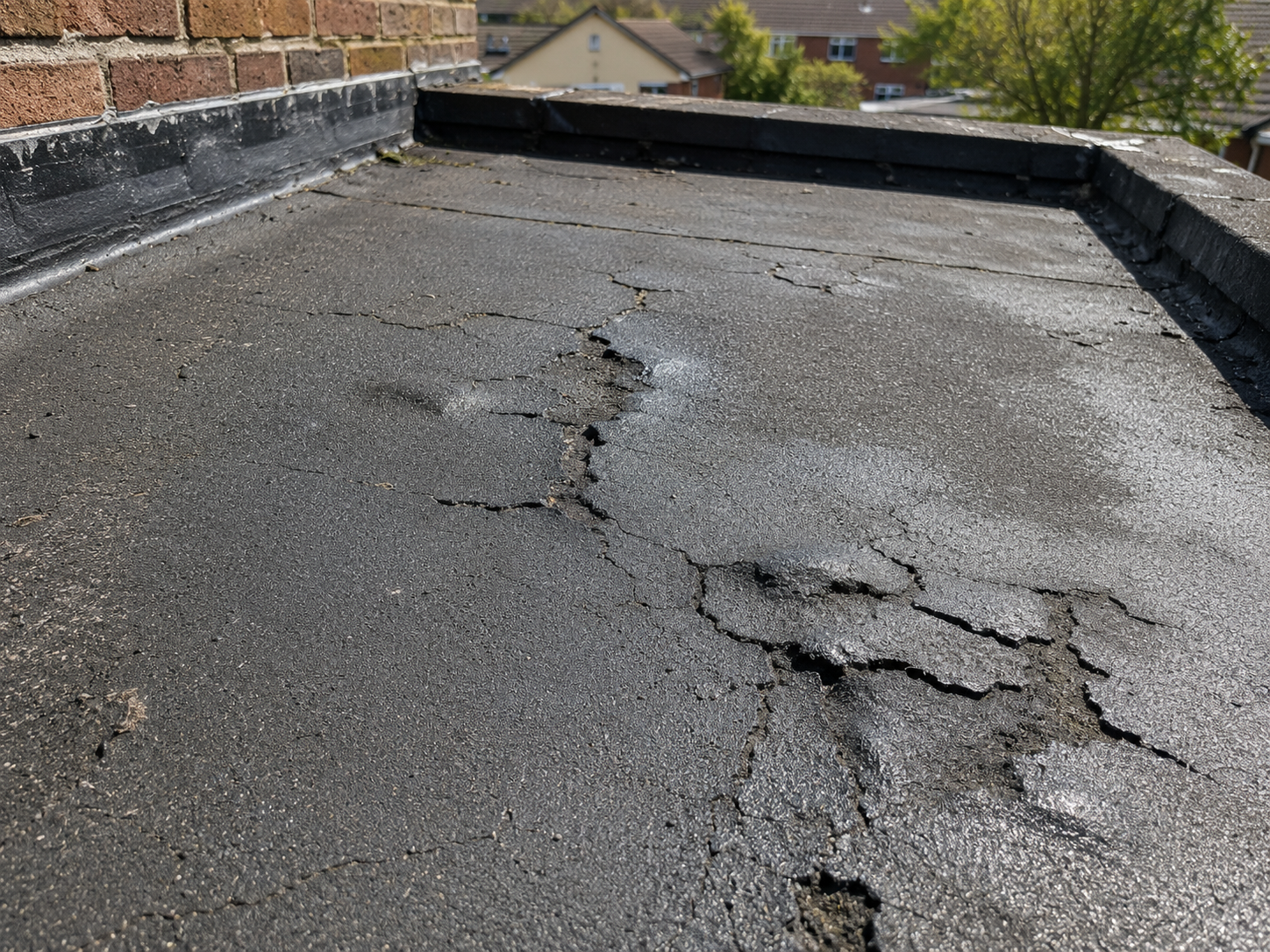
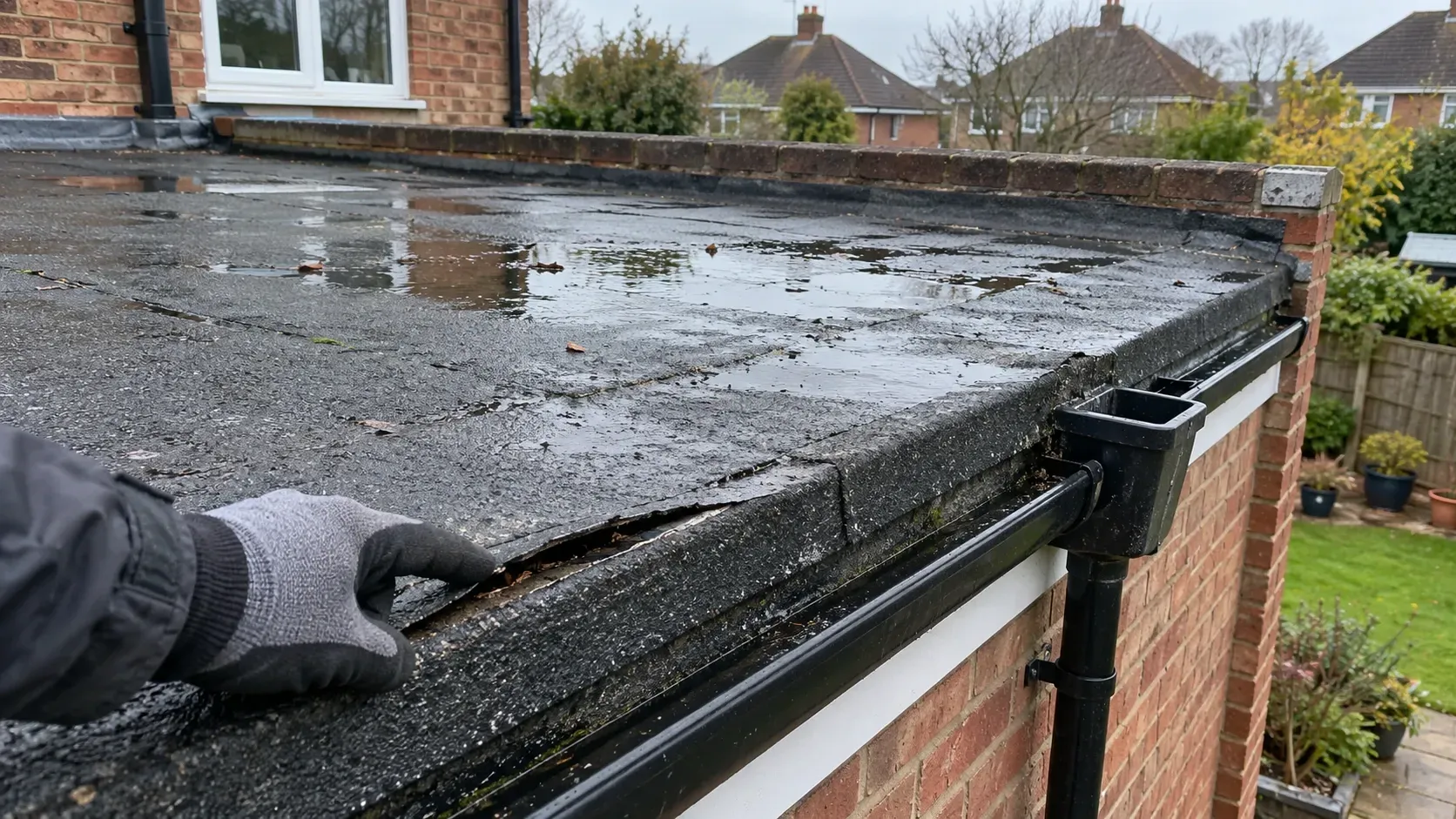
A leak returning in one spot may mean its source was missed. New leaks elsewhere, worn underlay or failing battens can make repeated patching poor value. On a flat roof, a small edge split may be repairable; several split laps, brittle felt, waterlogged decking or persistent ponding make renewal more likely. See our
flat roofing options for extensions and garages.
8. An ageing roof
An original concrete-tiled roof on a 1960s–80s home in Cowplain, Horndean or Purbrook merits inspection, but it does not have an automatic expiry date. Broad service-life guides are 40–60 years for concrete tiles, 60 years or more for clay, 80–100+ for natural slate, and 10–20 for traditional felt flat roofs. Some EPDM systems claim 50+ years; GRP can reach around 30 years or more. Installation, exposure, maintenance, fixings and underlay matter as much as the covering's age. A dry, stable older roof may only need a repair.
How to decide between a repair and a new roof
Ask whether damage is local or spread across several slopes, whether the underlay and timbers are sound, and whether earlier repairs have held. A straight roofline and one traceable leak usually favour repair. Widespread failure, rotten boards, sagging or leaks from several sources make replacement worth discussing. A quote for a re-roof should explain why a lasting repair will not do, what is included, and how hidden timber damage would be handled. For a major spend, a second opinion is reasonable.
If an inspection points to renewal, see our
new roofs service. A re-roof usually replaces the covering on an existing roof; a new structure on an extension is a different job and cost.
What might a new roof cost in 2026?
There is no reliable Waterlooville price without seeing the property. As broad 2026 UK budgeting ranges for stripping and re-covering a pitched roof, allow about £5,000–£9,000 for a small terrace, £6,500–£12,500 for a typical three-bedroom semi, and £9,000–£16,000 or more for a detached home. These are national guides, not local quotations; the Checkatrade roof replacement cost guide uses its own assumptions.
Area, shape, materials, timber condition, scaffolding and access can change the price considerably. Ask for an itemised written quote covering VAT, scaffold, waste, battens, underlay, flashings, ridge work and any Building Control fees. Check inclusions before comparing prices.
Permission and Building Regulations
In England, like-for-like re-roofing that does not materially change a house's appearance usually needs no planning permission. Listed buildings, protected areas and significant changes need separate checks. Building Regulations are different. The
Planning Portal's roof guidance says an application is not normally needed for repairs or re-covering only when
both less than 25% of the total building envelope
and less than 50% of the roof are affected. Structural or fire-performance changes and a covering that adds 15% or more weight can also trigger approval. A full re-roof will usually need approval and an insulation check under Part L. Confirm who handles the application and keep the completion paperwork.
Get an answer for your roof
Take photos from the ground, note when any damp appears and stay off the roof. We can arrange a local assessment and a free, no-obligation quote across Waterlooville, Cowplain, Purbrook, Horndean, Denmead, Clanfield and Havant.
Get in touch or email us at
enquiries@waterloovilleroofers.co.uk. You can also
read about how we work.
Frequently Asked Questions
Does one damp patch mean I need a new roof?
No. It could come from a local roof fault, guttering, condensation or plumbing. Trace the source before choosing a repair.
Can just a few tiles be repaired?
Usually, if the surrounding covering, fixings and layers beneath remain sound. Widespread breakage needs a broader assessment.
Do I need permission for a new roof?
Like-for-like work often needs no planning permission, but a full re-roof will usually need Building Regulations approval. Check listed or protected status and the proposed scope.
Recent Posts