Is your roof ready for winter? A Waterlooville homeowner's checklist
Preparing a roof for winter in Waterlooville means checking where wind-driven rain could get in and whether water can drain away. Look at tiles, ridges, gutters, chimney flashing and the loft before a run of bad weather. Do the checks from the ground, a safe window or inside; leave work at height to a roofer. If you already have a leak or slipped tile,
request a free, no-obligation quote or email us at
enquiries@waterloovilleroofers.co.uk

Why the local weather matters
Waterlooville and nearby Cowplain, Purbrook, Horndean, Denmead, Clanfield and Havant usually face wet, windy winters rather than lasting snow. South-westerly gusts and rain off the Solent can work beneath loose tiles and into worn flashing or flat-roof joints. Exposed edges toward Portsdown Hill take more wind. The priorities are a secure covering, clear drainage and sound joins. A sound older roof may need no work, while one loose ridge tile on a newer roof still needs attention.
Your six-point pre-winter roof checklist
Choose a dry, daylight hour. Binoculars help, but do not lean from a window, use a ladder on wet ground or climb onto the roof.
1. Tiles, slates, ridges and verges
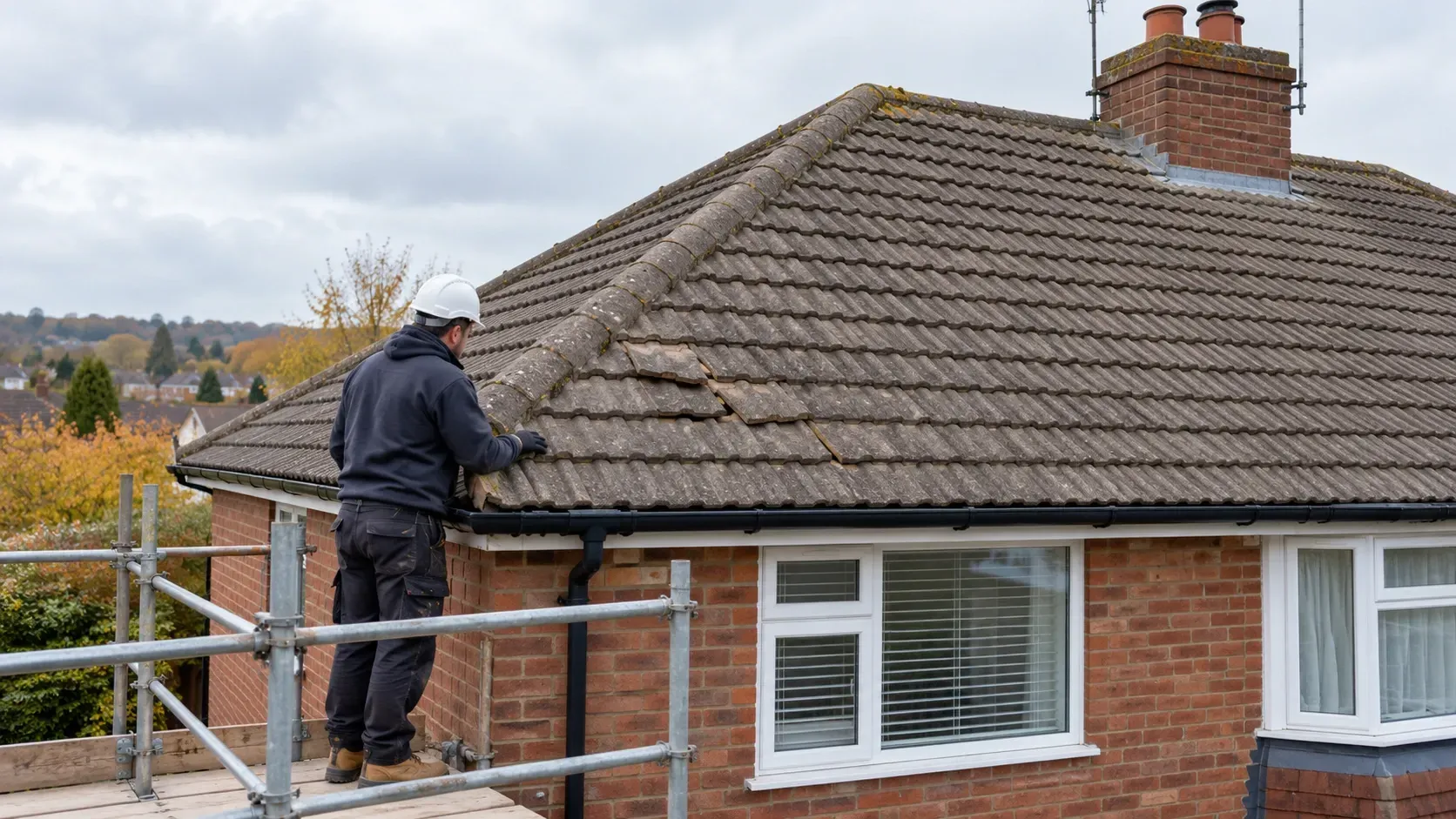
From the ground, look for gaps, broken corners, tiles out of line and fragments below the eaves. Check the ridge and side edges for loose sections or crumbling bedding. One slipped tile on an otherwise sound roof is often a roof repair; repeated movement across several slopes calls for a wider check. Keep people away from loose material overhead.
2. Gutters and the roof edge
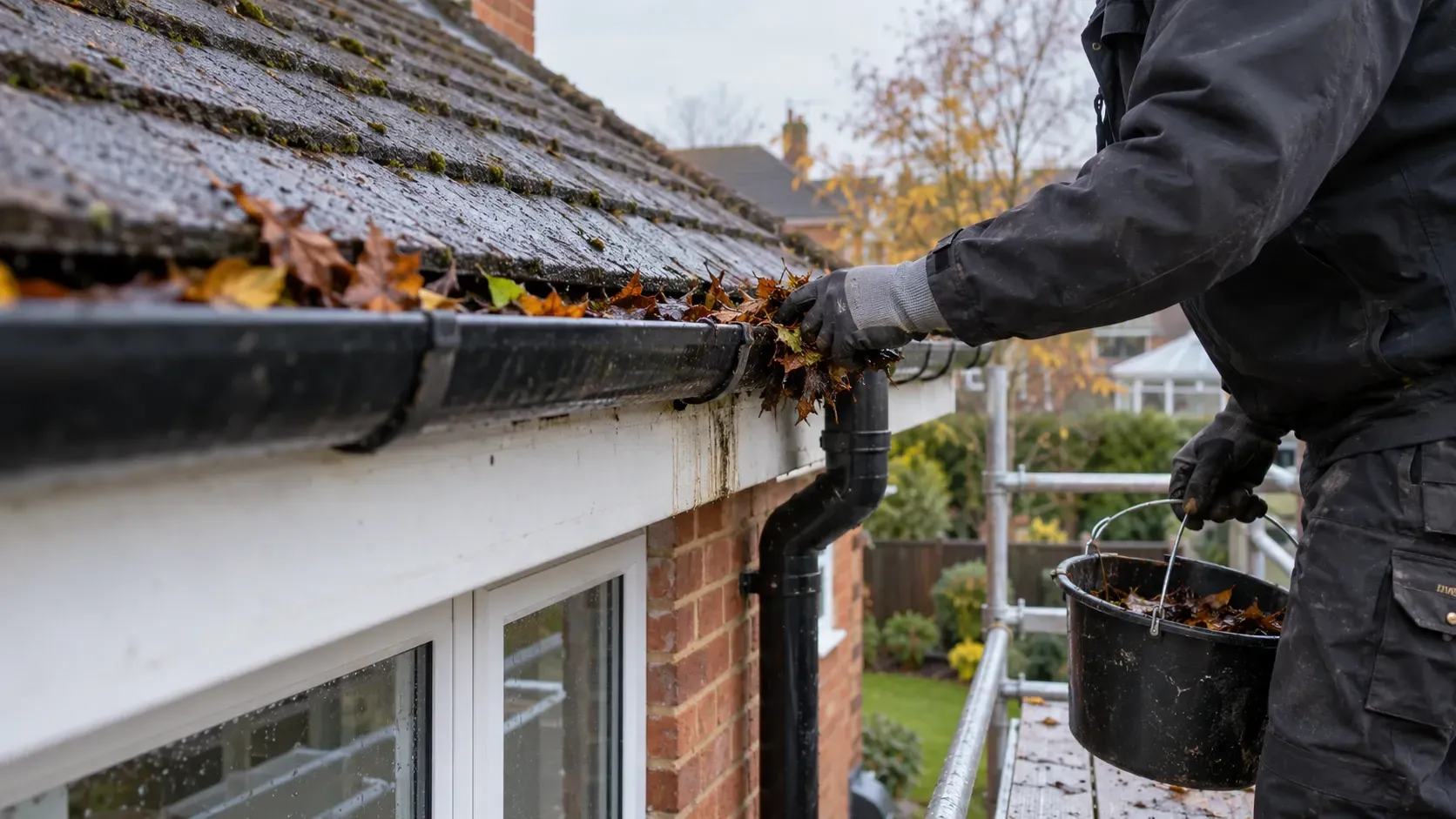
In the next downpour, see whether water reaches the downpipe or spills over the gutter. Leaves, moss, plants, sagging lengths and wall streaks point to blocked or damaged drainage. Overflow can wet brickwork and fascias even when the covering is sound. Clearing leaves may be enough, but leaking joints, brackets or boards need repair. See our
guttering, fascias and soffits service; leave high gutters to someone with safe access equipment.
3. Chimney and flashing
Look for lifted lead flashing, cracked pointing, loose mortar or a chimney that appears to move. A stain by the chimney breast may help locate a leak even if you cannot see the small lead soakers. One failed detail rarely means the whole roof must go. A chimney repair might involve repointing, flashing or brickwork; get a written quote after the fault is identified.
4. Flat roofs
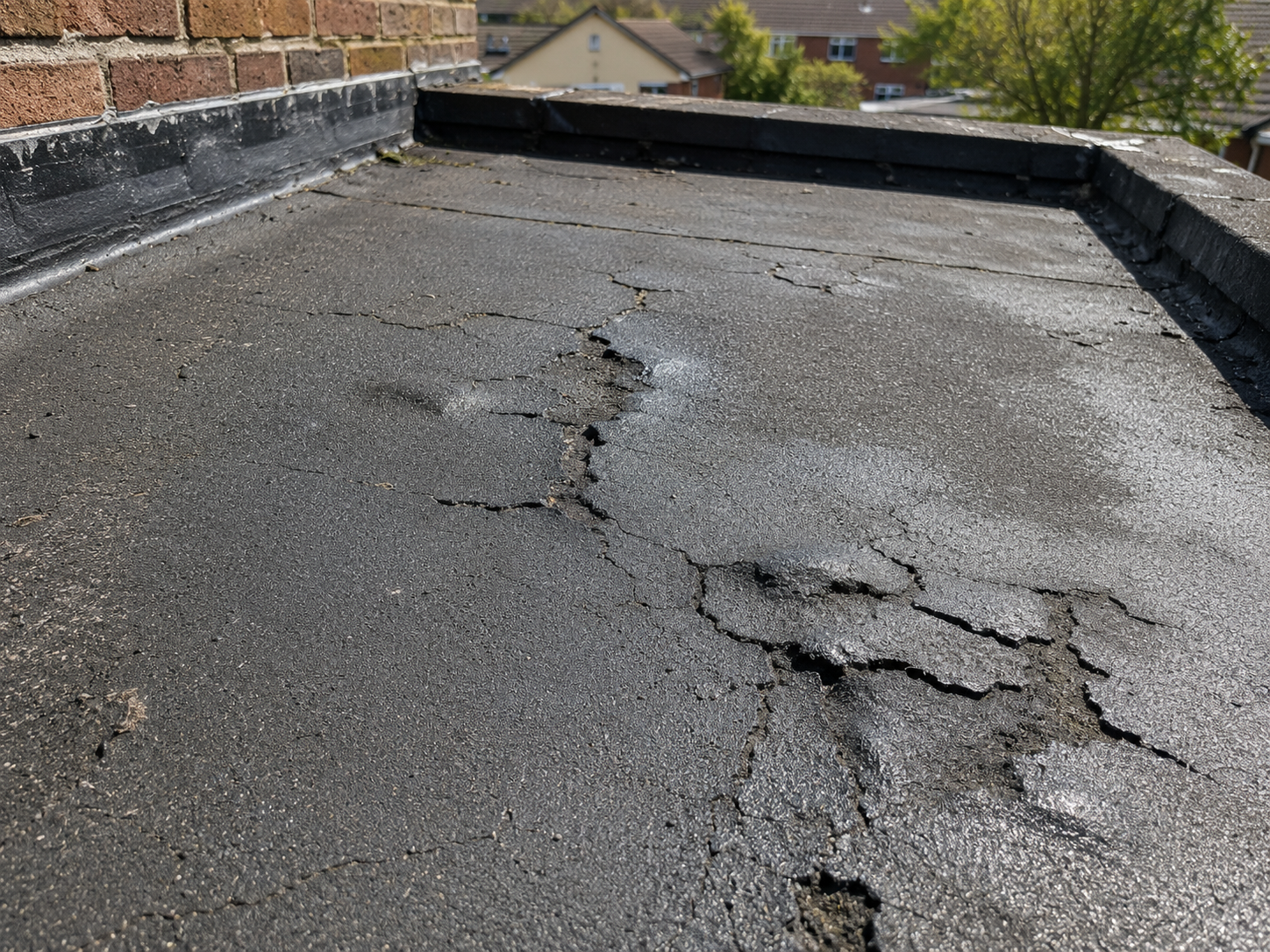
From a safe upstairs window, check for splits, blisters, open seams, lifted edges and blocked outlets. Brief standing water after rain is not automatically a failure. Persistent ponding with a leak, brittle felt or damp decking needs attention. A small defect may be repaired; widespread damage may favour renewal. Our flat roofing page covers both options.
5. The loft
From safe footing, check for fresh stains, wet underlay or insulation and unexpected daylight. Light at a designed vent is normal. Marks that follow wind and rain may be a leak; widespread moisture in a cold loft can be condensation. Photograph changes and avoid walking between joists or touching suspect electrics.
6. Objects around the house
Secure bins, garden furniture and loose fence panels before strong winds. Check whether overhanging branches could scrape or strike the roof, and arrange tree work safely. These steps protect gutters and roof edges as well as the covering.
Signs of roof storm damage
Once the weather settles, look safely for:
· Tiles, ridge fragments, lead or other roof materials on the ground.
· New gaps, uneven tiles or moved chimney or gutter sections.
· Fresh ceiling stains, drips or debris resting against the roof.
Take photos and keep people clear of anything loose overhead. A damp patch can be some distance from where rain entered, so have the source traced before choosing a repair.
Storm damage and insurance: the first steps
If water is coming in, move belongings, contain it if safe and stay clear of damaged electrics. Photograph the damage from a safe place, then contact your insurer promptly, especially before arranging more than a temporary repair. The Association of British Insurers' storm advice recommends recording damage, asking the insurer about next steps and keeping receipts.
Many buildings policies cover sudden storm damage, but the policy wording and cause decide each claim. Some define a storm using gusts around 55 mph; that is not a universal rule. Weather records, photographs, maintenance history and a roofer's report may matter. Wear and tear is usually excluded, yet a roof need not be perfect if the storm was the main cause, as the Financial Ombudsman Service explains. Ask whether the insurer wants its own surveyor or an itemised quote. If a claim is declined, request the reasons and evidence in writing.
Be wary of an uninvited trader pressing for immediate work. Make the area safe, but understand the proposed repair and cost. For an assessment in Waterlooville or Horndean, email us at enquiries@waterloovilleroofers.co.uk.
Emergency attendance depends on availability and weather conditions.
Repair or replace after a winter leak?
A slipped tile, one failed flashing or an overflowing gutter is often repairable. Replacement is worth discussing if leaks occur in several places, underlay or fixings are failing widely, or sound repairs no longer hold. Ask the roofer to show why a repair would not last. If renewal is needed, see our
new roofs service..
Get your roof ready for winter
Tell us what you have noticed, when it appeared and whether you have photos. We can arrange a local assessment and a free, no-obligation quote.
Get in touch or email us at
enquiries@waterloovilleroofers.co.uk; you can also
read about how we work.
Frequently Asked Questions
When should I prepare my roof?
Check it in autumn if you can, and again from the ground after a significant storm.
Does insurance cover storm damage?
It may, depending on the policy and whether the storm caused the damage. Record what happened and contact your insurer promptly.
How can I tell if a storm damaged the roof?
Look for fallen roof materials, new gaps or leaks, fresh stains and loose guttering or flashing.
How often should I inspect it?
There is no single interval for every roof. Check in autumn and after major weather; arrange a professional visit for a previous leak or a roof you cannot see clearly.
Should I climb up to inspect it?
No. Use the ground, a safe window or the loft, and leave work at height to a roofer.
Who should I call after storm damage?
Contact your insurer and a local roofer promptly if there is an active leak or safety risk. Keep people away from loose material.
Recent Posts